
Roofing & Siding in Deptford, NJ
Think of the roof and the siding as the house's raincoat. If either one has a hole, everything underneath gets wet eventually. Bulls Eye Building & Remodeling installs roofing and siding on homes in Deptford and the surrounding area. We treat the two as connected parts of one exterior, because the places where they meet are where most leaks begin.

Where Water Gets In
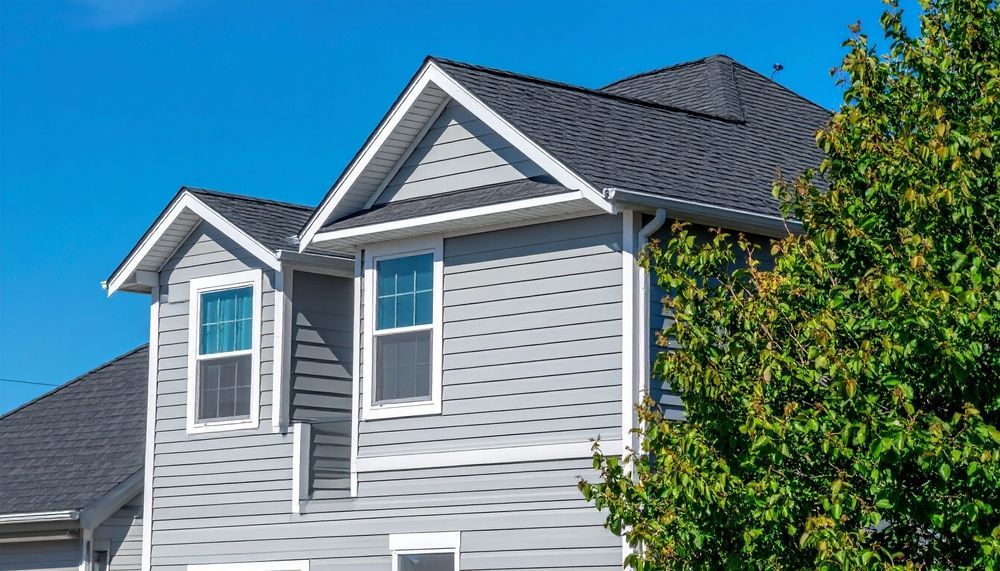
Shingles and siding panels shed most of the rain on their own. The trouble starts at the transitions: the valley where two roof slopes meet, the line where a lower roof runs into a wall, the edges around a chimney, and the top of every window. These are the points where flashing does the real work. Old or poorly installed flashing lets water slip behind the outer layer, where it can rot sheathing and framing for years before a stain shows up on a ceiling.
Outside signs are worth watching for. On the roof, look for shingle granules collecting in the gutters, curled or cupped edges, and bare patches after a storm. On the walls, look for warped or cracked panels, gaps at the corners, and siding that feels soft when pressed.
Roofing
Replacement
A full replacement usually means tearing the old shingles down to the deck. Once the deck is exposed, damaged sheathing can be found and replaced before new underlayment and shingles go on. Overlaying a second layer can be done in some situations, but it hides whatever is going on underneath.
Flashing and Ventilation
New shingles over old flashing is a common shortcut and a common source of callbacks. Replacing the step flashing, valley flashing, and drip edge at the same time gives the new roof clean edges to shed water. Attic ventilation gets checked too, since a hot, damp attic shortens the life of shingles from underneath.
Siding
Several materials are common on homes in this region, and each brings its own tradeoffs. Vinyl siding costs less, needs no painting, and comes in a wide range of colors and profiles. Fiber cement holds up well against impact and moisture and can be painted to any color, though it is heavier and costs more to install. Whatever the outer material, the weather-resistive barrier behind it is the layer that actually keeps water out of the wall, so it deserves as much attention as the color choice.
Doing the Whole Exterior at Once
Replacing roofing, siding, and windows in the same project lets every opening and edge be flashed in the right order: windows first, then the wall barrier lapped over the window flashing, then siding. If you are also considering new windows, our window and door installation can be scheduled alongside this work. Homeowners adding space to the house often need new roofing and siding to tie the old and new sections together, which our home additions in Deptford page covers in more detail. For the full list of what we build, visit the Bulls Eye Building & Remodeling
home page.
The clearest way to judge a contractor is to look at finished work. Our project portfolio shows kitchens, bathrooms, additions, decks, and exterior jobs from around the area, including before and after photos where we have them. If you want to understand what happens between the first phone call and the final walkthrough, our page on how we run a project lays out each stage.
Roofing and Siding FAQ
Can new shingles go over the old ones?
The residential code allows no more than two layers of asphalt shingles. A roof that already has two layers, or one with damaged sheathing or water-soaked shingles, has to be stripped down to the deck before a new roof goes on.
How much attic ventilation does a roof need?
The code's baseline is 1 square foot of net free vent area for every 150 square feet of attic floor. That can drop to 1 per 300 when the vents are balanced between intake low on the roof and exhaust near the ridge.
What is drip edge, and is it required?
Drip edge is a metal flashing installed along the eaves and rakes of the roof. It directs water into the gutter and away from the fascia. The residential code requires it on asphalt shingle roofs.
What is kickout flashing?
It is a small, angled piece of flashing installed where a roof edge ends against a wall, typically beside a lower roof or a porch. It turns water away from the siding and into the gutter. Without it, water runs down the wall and behind the siding at that corner. It is one of the most common sources of hidden wall rot.
What goes behind the siding?
A weather-resistive barrier, usually house wrap or building paper, covers the sheathing before siding goes on. Siding is treated as a rain screen, so some water gets past it. The barrier underneath is what keeps that water out of the wall framing.
Exterior Work Near Deptford
Homes across Wenonah, Bellmawr, Woodbury Heights, and Washington Township take the same South Jersey weather: humid summers, coastal storms, and winters that swing above and below freezing. We handle roofing and siding throughout Southern New Jersey and match the materials to how each house is exposed.